
Epilepsy Surgery
On this page:
Introduction
We run an epilepsy surgery programme at St George’s for certain people with difficult to treat seizures (also known as drug-resistant epilepsy). An excellent introduction to epilepsy surgery is available from the Epilepsy Society (https://epilepsysociety.org.uk/about-epilepsy/treatment/epilepsy-and-brain-surgery) and Epilepsy Action (https://www.epilepsy.org.uk/info/treatment/surgery/adult).
An introduction to the new neuromodulatory devices on offer for epilepsy is available with an interview from Mr Mike Hart (https://www.vjneurology.com/speaker/michael-hart/).
7T MRI
Small types of tumours and developmental abnormalities (known as ‘lesions’) can predispose to seizures, which can be particularly difficult to treat. In certain people, if these lesions are believed to be the cause of the seizures, then removing them with a neurosurgical operation can lead to a significant reduction in seizures. However, a critical part of this is having MRI scans available that can see what are often small and hidden lesions. We have access to one of the leading MRI research scanners in the world as part of our collaboration with Kings College London, based at St Thomas’ Hospital (https://www.kcl.ac.uk/research/facilities/london-collaborative-ultra-high-field-system-locus-facility). This is over twice the strength of even the best MRI scanners in University Hospitals, allowing us the best chance of finding these lesions.
VNS
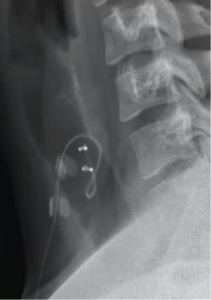
In Vagal Nerve Stimulation (VNS), electrical therapy is used to alter neural circuits in the brain which in turn reduce the chance of seizures. Other benefits include reducing medications, reducing seizure duration and severity, and improving mood. To do this, a device is surgically implanted. This comprises a lead with coils that wrap around the vagus nerve in the neck, and a battery which sits just under the collar bone.
These days, this is a routine day-case procedure. However, it requires close follow-up and programming, with the benefit tending to steadily improve over time.
An excellent patient-focused introduction to VNS is available from the Epilepsy Foundation (https://www.epilepsy.com/treatment/devices/vagus-nerve-stimulation-therapy).
EASEE
A new therapy for certain types of seizures is known as EASEE®, which stands for Epicranial Application of Stimulation Electrodes for Epilepsy. This delivers electricity to the part of the brain believed to be causing seizures. This is believed to stabilise the brain’s activity and reduce seizures. A major advantage of this procedure is that there is no surgery on the brain, and the effect won’t fluctuate like it can with medications.
In terms of benefit, there is one main study that suggests seizures can be reduced by half in about 2 out of every 3 people at 2 years. The results are likely to be best if we know the seizures are coming from a clear area of the brain.
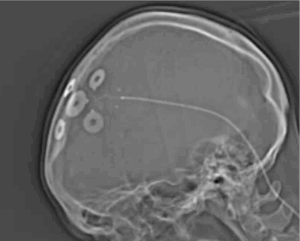
Practically, this involves an operation to place a 5cm pad under the scalp and attached it to the skull, which is then connected to a battery sitting under the collar bone. This is completed as a small operation under general anaesthetic as a day-case procedure. A major advantage to this is there is no brain surgery – everything is placed on the skull and the chance of any complication is very low.
An excellent patient-focused introduction to the therapy is available at Epilepsy Action (https://www.epilepsy.org.uk/news/a-new-option-for-epilepsy-treatment-uks-first-easee-implant) and the Epilepsy Society (https://epilepsysociety.org.uk/about-epilepsy/treatment/easee-device).
Referrals
Who to refer?
Anyone with epilepsy whose seizures have not responded to at least two anti-seizure medications can be considered.
- If you are already seen by a member of the epilepsy team, do speak with your consultant about epilepsy surgery.
- If you are seen outside of St George’s hospital, do speak to your neurologist for a referral to our epilepsy team for a discussion about epilepsy surgery.
How to refer?
Patients can be referred to our epilepsy neurology team, the epilepsy multidisciplinary team meeting (MDT), or neurosurgery. For information on how to do this please see the Neurosciences Booking Service Page: https://www.stgeorges.nhs.uk/service/neuro/neurosciences-booking-centre/
For patients already under the care of the epilepsy team, please email: adult.epilepsynurse@stgeorges.nhs.uk
For more information on our epilepsy neurology service, please see:
https://www.stgeorges.nhs.uk/service/neuro/neurology/epilepsy/
Information for patients
Here are some helpful links for patients and carers from the many charities in the field:
Epilepsy Research Institute UK: https://epilepsy-institute.org.uk/eri/about-epilepsy/what-is-epilepsy/
Epilepsy Society: https://cureparkinsons.org.uk/about-parkinsons/
Please note this list is not meant to be exhaustive and I’m sure there are many other helpful resources available too.
Disclaimer
The following information is provided to be helpful and encourage discussions with healthcare professionals on treatment options. It is not intended to be guidelines or formal medical advice. Any potential operation needs to be fully discussed with the team involved.