
World first gene therapy treats rare form of childhood blindness
An eleven-year-old girl from London has become the first NHS patient to receive a revolutionary new treatment for a progressive form of severe blindness.
Catherine L’Estrange was diagnosed with Bardet Biedl Syndrome (BBS) as a baby, a rare condition starting in early childhood that often results in almost complete loss of sight by the late teens.
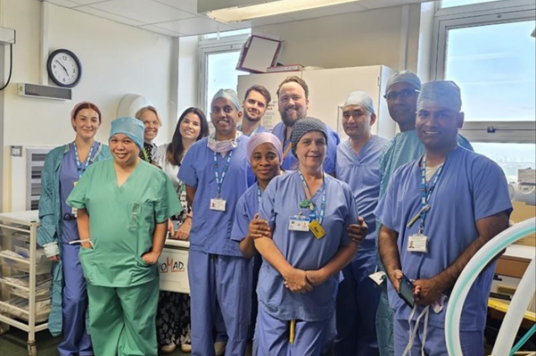
Catherine, from North Acton, is the UK’s first patient with BBS to receive the novel retinal gene therapy at St Helier Hospital in Sutton – the first site in the world to offer this new treatment for a devastating condition that would otherwise be incurable.
This follows the world’s first surgery carried out by St Helier Hospital in August last year.
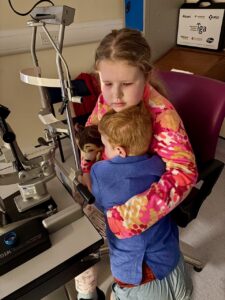
Catherine’s dad, the Reverend Timothy L’Estrange, said: “Most children with BBS are undiagnosed until at least primary school age, but we had a highly unusual infant diagnosis when Catherine was just a few weeks old.
“When Catherine was diagnosed with Bardet Biedl Syndrome so young, we were able to begin planning for her future. Our policy was to develop her independence and resilience as much as possible, ready for the inevitable loss of her sight, which began with her becoming night-blind, then colour-blind, and continued with her losing her peripheral vision.
“We were told that possible gene therapy was many, many years away, and was likely to arrive after Catherine had entirely lost her sight – so we were surprised and delighted when we learned this treatment had become available, and that Catherine would be one of the first patients in the world to receive it.
“Our whole family has been so grateful for the opportunity to save Catherine’s vision – it will be absolutely life changing for her to retain any vision at all. We are excited to see how the results of the gene therapy emerge over coming months.”
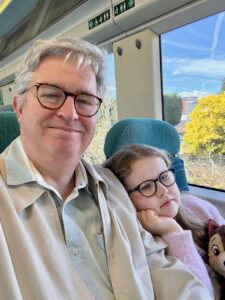
Catherine said: “If this treatment works, it will help me to carry on seeing things around me, and most of all I will be able to carry on reading books, which is one of my favourite things to do.”
Bardet Biedl Syndrome is an ultra-rare genetic condition thought to affect around 1 in 150,000 babies, starting in childhood and affecting many parts of the body, ultimately leading to vision loss as the retina gradually deteriorates.
BBS can be caused by mutations in more than 20 different genes, with this treatment available for those with mutations in the BBS10 gene – the second most prevalent form of BBS.
The world-first gene therapy was developed and manufactured by MeiraGTx, a clinical-stage genetic medicines company, and is delivered by St Helier surgeons via keyhole surgery by injecting healthy copies of the gene into the patient’s eye.
Pre-clinical studies in mice were conducted by MeiraGTx and the Drack Lab at the University of Iowa and the gene therapy was developed with support from the charity, InVision 20/20.
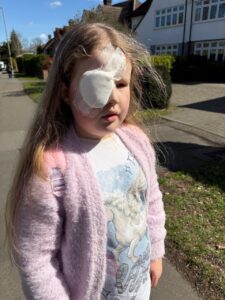
Catherine is the second patient in the world to receive it for BBS10 after a 17-year-old girl from Canada (who wishes to remain anonymous) became the first ever having had surgery at St Helier in August 2025.
The girl’s parents said: “This treatment has given our daughter a precious chance to preserve her vision, and we hope it will become a life-changing therapy for children with BBS10 all over the world.”
The gene therapy is similar to Luxturna – an approved retinal gene therapy for a similar but different form of genetic blindness, called Leber Congenital Amaurosis.
Neruban Kumaran, Consultant Eye Surgeon at Epsom and St Helier University Hospitals NHS Trust, said: “Many teams throughout our hospital group – including ophthalmology, pharmacy, and theatre teams – have worked exceptionally hard to offer hope to children with this rare condition and their families.
“We’re so pleased to offer this novel treatment through collaboration with Great Ormond Street Hospital and Moorfields Eye Hospital, who helped to identify eligible patients from their specialised clinics, and early positive feedback from the children and their families is very exciting and offers real hope to those affected by this condition.”
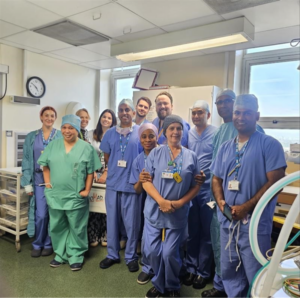
Mat Shaw, Chief Executive of St George’s, Epsom and St Helier Hospitals Group, said: “We are actively reimagining what hospital care can be through clinical research, bringing together experienced specialist teams, and by championing excellence from our clinicians to deliver new, innovative treatments.
“As a father, I can’t imagine how it feels to watch your child slowly go blind, and I’m so proud that our teams are offering hope to these children and their families, which aims to stop childhood blindness in its tracks and change what’s possible for the future of children with this devastating condition.”
The team at St Helier hospital hope to continue delivering successful treatments to BBS patients as the pioneering site for delivering this gene therapy surgery.