

Pelvic health
On this page:
Pelvic health encompasses the overall well-being of the organs, muscles, and connective tissue inside the pelvis.
Awareness of good pelvic health involves optimising the function of the bladder and bowel and impacts sexual function and quality of life.
Below we will highlight some areas that everyone (whether they have gone through treatment for cancer or not) should try to follow.
Hydration
It is important to stay hydrated for your overall health, but particularly this helps to keep your bladder happy by reducing dehydration and irritation.
It also reduces the risk of constipation which can put unnecessary pressure on the pelvic floor muscles. Ideally, try to drink 5-8 cups of fluid daily to keep a happy bladder and bowel.
Avoid Irritants
Some food and drink can irritate your bladder and bowels e.g. spicy food, citrus fruit, fizzy drinks, caffeine, and alcohol.
If you have these irritants in your diet, and have problems with your bladder or bowel, it is worth considering gradually cutting down. Where possible, swaps can be made to make it easier e.g. swapping caffeinated tea for decaf or using cucumber to flavour water instead of citrus.
Pelvic Floor Muscle Exercises
Your pelvic floor is a group of muscles which can be found at the base of your pelvis. These muscles attach from your tailbone to the pubic bone to form a bowl/hammock like shape.
These muscles help to support your pelvic organs (if they have not been removed as part of your treatment). They also help to maintain continence and enhance sexual function.
Some cancer treatments can cause the pelvic floor muscles to not work properly, which may lead to bladder and bowel symptoms such as urgency, incontinence, and prolapse.
Please see the ‘bladder symptoms’ or ‘bowel symptoms’ pages for more detail. For this reason, it can be useful to familiarise yourself with these muscles and ensure they are functioning well to reduce the risk of these symptoms.
To exercise your pelvic floor muscles, try the below:
- In sitting or lying, slowly tighten the muscles around your anus and front passage (vagina or base of your penis), lifting up and in as if trying to stop yourself passing wind and urine
- Long holds: hold the squeeze for as long as you can (up to 10 seconds) and then fully relax. Relax for as long as you have squeezed, repeat 5-10 times
- Short holds: squeeze as quickly as you can and then fully relax, repeat up to 20 times
- Try both exercises three times a day
If you have practiced these exercises consistently for 6-8 weeks and you have not started to see a change in your symptoms, you are unable to feel a squeeze or lift, or if your symptoms get worse when you do these exercises, please speak to your GP or cancer team who can support you with this.
For more guidance on pelvic floor muscle exercise, watch our video below:
Please see the links below for our video on how to complete these exercises. The guidance we give within these videos relates to your anatomy. We understand that some individuals may have some physical differences related to personal characteristics, injuries, surgeries, and different treatments that they may have undergone.
Optimise Bowel Movements
Setting up good bowel habits can improve not only your bowel health but your overall pelvic health. To optimise your bowel health, see the Bowel symptoms page and consider trying:
Diet:
- Regular mealtimes
- 5-7 portions of vegetables and fruit each day, unless you have been told to follow a low-fibre diet
- Include wholegrain or wholemeal carbohydrates e.g. brown rice or granary bread
- Introduce fibre gradually
- 5 litres of fluid each day (5-8 cups)
Habits:
- A good size breakfast and warm drink can stimulate your gut
- Go when you feel the urge, ignoring this urge can cause the stool to dry out and make it harder to pass
- If you are going more than three times a day, you may benefit from bowel retraining *click here* or to speak to your GP or cancer team if this persists
- Try to manage stress and anxiety as best you can
Toilet position:
- Trying to sit in more of a squat position e.g. feet on a stool, can help to relax the pelvic floor muscles to empty your bowels more easily
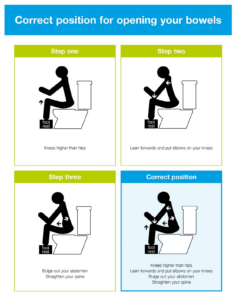
Diagram reproduced and distributed with the kind permission of the co-authors, including Wendy Ness, Colorectal Nurse Specialist. Produced as a service to the medical profession by Norgine Ltd. ©2017 Norgine group of companies.
Medications:
- Ask your pharmacist or treating clinician if any of your medications could be contributing to your constipation or diarrhoea and discuss with your doctor before stopping any prescribed medication
- Ask your pharmacist about suitable fibre supplements, suppositories, or mini-enemas to help with your constipation or diarrhoea
Resources
- The Squeezy app
- The getUbetter app
The getUbetter app is a tool designed to help you manage your conditions and guide your recovery day-by-day. It offers you a symptom checker, management advice as well as video exercises. It also advises you when you may need to seek further help, and connects you to your local health service.